


Statement on World Humanitarian Day 2026

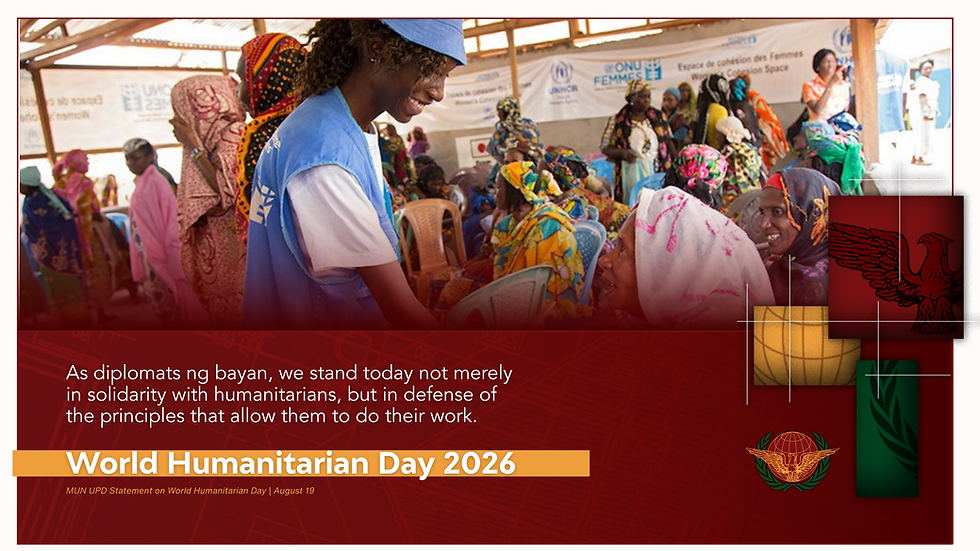
Humanitarianism is not simply an act of compassion, but a commitment to protect human life and dignity amid the world’s gravest crises. As conflicts intensify, disasters worsen, and humanitarian needs outpace the resources available to address them, we commemorate World Humanitarian Day by honoring those who continue to serve communities at the frontlines of suffering. As such, the courage of humanitarian workers shall not merely be celebrated, but we must demand their protection, uphold international humanitarian law, and ensure that no human life is treated as expendable.
From conflict zones to communities devastated by climate disasters, humanitarian workers stand alongside those whose lives have been disrupted by forces beyond their control. Yet those who provide food, medicine, shelter, and protection are increasingly becoming targets themselves. The United Nations notes that humanitarian workers continue to be killed, injured, detained, abducted, and obstructed while carrying out life-saving work, with local and national responders often bearing the greatest risks. As diplomats ng bayan, we stand today not merely in solidarity with humanitarians, but in defense of the principles that allow them to do their work. We stand to protect civilians, safeguard humanitarian access, and demand accountability from those who violate the laws designed to preserve human dignity even in times of war.
Thus, humanitarianism must be recognized not as charity, but as a collective responsibility to protect life and dignity. World Humanitarian Day commemorates the 22 humanitarian workers killed in the 2003 Canal Hotel bombing in Baghdad, whose sacrifice became the foundation for the annual observance. Their legacy reminds us that humanitarian workers should never become casualties of the crises they seek to alleviate. As diplomats, advocates, and members of a global community, we are called to turn solidarity into action - to defend international humanitarian law, amplify the voices of affected communities, and demand that those in power protect the people who dedicate their lives to protecting others.
For Solidarity Across Borders.


Comments